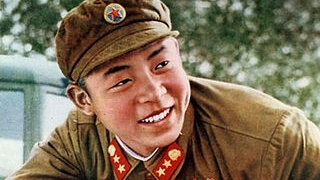
Lei Feng
Introduction
Lei Feng (1940-1962) was a soldier in the People's Liberation Army of China, renowned for his altruism, dedication, and selflessness. He remains a cultural icon in China, symbolizing virtues such as modesty and unwavering commitment to helping others.
Early Life and Background
Lei was born on December 18, 1940, in Hunan province. He came from humble beginnings and faced a challenging childhood, marked by the loss of his parents at a young age. Despite these hardships, Lei exhibited a strong sense of responsibility and a commitment to serving the community. After completing middle school in 1956, he worked as a tractor driver on a local farm. In 1958, he transitioned to being a bulldozer driver at an iron and steel factory in Anshan, Liaoning, and eventually joined the People's Liberation Army in 1960.
Military Service and Legacy
Lei Feng became a member of the Communist Party of China in 1960 and served in a transportation unit of the People's Liberation Army based in Northeast China. During his time in the army, Lei was known for his exemplary conduct, selfless service, and dedication to helping others. He volunteered for various tasks, assisted his fellow soldiers with their duties, and was deeply involved in community service activities. Tragically, Lei Feng's life was cut short when he died in a fatal accident on August 15, 1962, at the age of 21.
Cultural Icon and "Learn From Lei Feng Day"
Lei Feng's legacy as a symbol of altruism and humility was perpetuated after his death, particularly following the call by Chairman Mao Zedong in the People's Daily on March 5, 1963. This article celebrated Lei Feng's spirit and contributions, leading to the establishment of "Learn From Lei Feng Day" on March 5 each year. The day is marked by various activities and events across China, encouraging people to emulate Lei Feng's spirit by engaging in charitable acts and community service.
Lei Feng in Popular Culture
Lei Feng's life and legacy have been immortalized in various forms of artistic expression, including music, theater, and film. The beloved Chinese song "Xue Xi Lei Feng Hao Bang Yang" (Learn From the Role Model Lei) has become a cultural staple, performed by professional singers and choirs across the country. The song was composed by Wu Hongyuan and Lou Shengmao in 1963, shortly after Lei's legacy was celebrated by Mao Zedong.
The influence of Lei Feng's life extends beyond music; his story has been depicted in numerous plays and films. For instance, the Chinese musical Me & My Lei Feng, directed by Jia Ding and Wei Sijia, weaves a narrative that highlights Lei Feng's enduring impact on Chinese society. The musical, supported by the Beijing Culture and Arts Fund, features a repertoire of over 30 original Chinese songs, showcasing Lei Feng's virtues and legacy.
Educational Impact
The spirit of Lei Feng continues to influence educational initiatives across China. Schools and universities incorporate Lei Feng's story into their curricula, encouraging students to learn from his values and apply them in their daily lives. The Jianghai Volunteer Association, established in August 2013 in Rudong county, has grown into one of the largest public welfare organizations in the region, promoting the Lei Feng spirit by organizing voluntary programs to assist the elderly and children in need.








